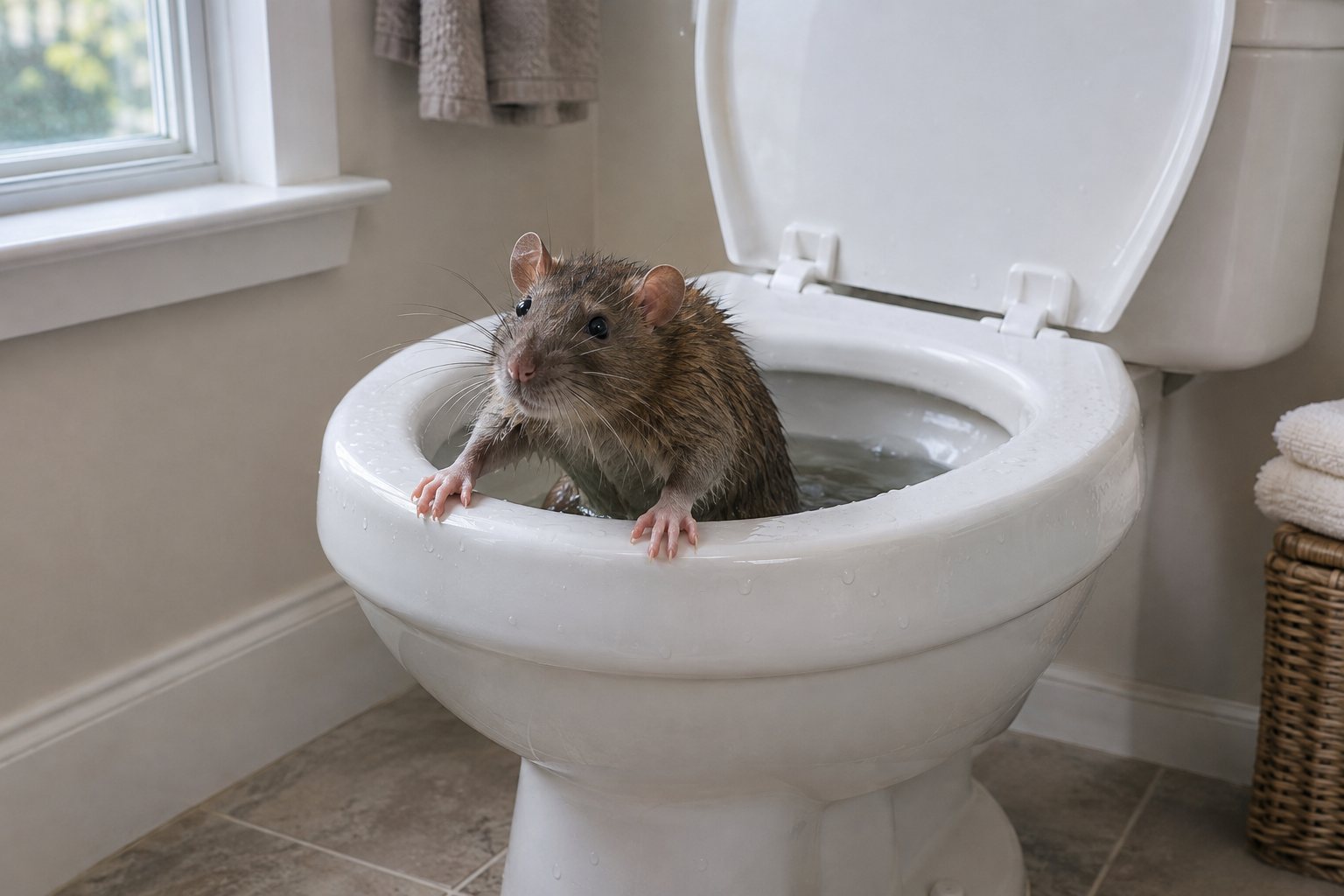

Rat reportedly emerges from a Hampton Roads toilet, raising concerns about sewer access, rodent-borne diseases, fleas, and home safety.
VIRGINIA BEACH, VA, UNITED STATES, November 23, 2026 /EINPresswire.com/ — A reported incident involving a rat emerging from a residential toilet in Hampton Roads is raising awareness about how rodents can enter homes through sewer systems and the potential health risks associated with rats, their droppings and the fleas they carry.
Although unusual, rats can swim through sewer pipes, navigate plumbing systems and occasionally emerge through residential toilets. The incident serves as a reminder that rodents can access homes through unexpected entry points.
Why Hampton Roads Homes May Be Vulnerable
Communities throughout Virginia Beach, Chesapeake, Norfolk, Portsmouth, Suffolk, Hampton, Newport News and Williamsburg contain extensive stormwater infrastructure, sewer systems, drainage ditches and waterways that can provide suitable environments for rodents.
Waterfront neighborhoods such as Ocean View in Norfolk, Chic’s Beach and Great Neck in Virginia Beach, and areas surrounding Deep Creek and Great Bridge in Chesapeake may have environmental conditions favorable to rodent activity.
Norway rats, commonly associated with underground burrows and sewer environments, are particularly capable swimmers. Their presence does not necessarily indicate poor housekeeping, and even well-maintained homes can experience rodent intrusion.
CDC Warns of Diseases Associated With Rodents
According to the Centers for Disease Control and Prevention (CDC), rats and mice can carry diseases that spread through contaminated urine, droppings, saliva, bites and contact with infected materials.
Leptospirosis — This bacterial infection can spread through water or soil contaminated with infected animal urine. Severe infections can cause kidney damage, liver problems and other serious complications.
Rat-Bite Fever — This illness can develop following bites, scratches or certain other exposures to infected rodents. Symptoms may include fever, headaches, vomiting, rash and joint pain.
Salmonellosis — Rodents can contaminate food, kitchen surfaces and stored materials with Salmonella bacteria, potentially causing gastrointestinal illness.
Hantavirus — Certain rodent species can transmit hantaviruses through contaminated droppings, urine and saliva. Inhaling airborne particles from disturbed contaminated materials can cause infection. Deer mice are a primary U.S. carrier of hantaviruses associated with hantavirus pulmonary syndrome.
Lymphocytic Choriomeningitis (LCM) — This viral infection is primarily associated with house mice and may pose particular risks to pregnant women and people with weakened immune systems.
Not every rodent carries these diseases, and their presence does not automatically mean residents have been exposed.
Fleas on Rats Present Additional Health Concerns
An often-overlooked danger associated with rodents involves the fleas that may live on them.
The CDC identifies several flea-related health concerns:
Flea-Borne Typhus — Also known as murine typhus, this bacterial disease can spread through infected fleas or their feces. Symptoms can include fever, headaches, rash and muscle aches. Most U.S. cases occur outside
George Pilkington
Universal Pest & Termite, Inc.
Visit us on social media:
Instagram
Facebook
YouTube
TikTok
X
Legal Disclaimer:
EIN Presswire provides this news content “as is” without warranty of any kind. We do not accept any responsibility or liability
for the accuracy, content, images, videos, licenses, completeness, legality, or reliability of the information contained in this
article. If you have any complaints or copyright issues related to this article, kindly contact the author above.

Media gallery