
Key Takeaways
- Running a test heating cycle before cold weather arrives can reveal startup trouble, weak airflow, or odd noises while there is still time to fix them
- A dirty furnace filter restricts airflow and forces the system to work harder, so checking it monthly during heating season matters
- High-efficiency furnaces have outdoor intake and exhaust vents, plus a condensate drain, that can freeze or clog and shut the system down mid-winter
- Certain furnace parts, including the heat exchanger and safety controls, need a trained technician’s eyes rather than a homeowner’s inspection
- Northwest Plumbing, Heating & AC says a furnace preventative maintenance plan that includes an annual check is one of several heating services worth knowing about before the first freeze – find more expert insights below
Cold snaps in the Quad Cities have a way of arriving before anyone feels ready for them, and a furnace that has sat quiet since spring does not always wake up without a hitch. Most homeowners can catch early warning signs with a few simple checks, saving the complicated diagnostics for a trained technician.
Test Your Furnace Before Cold Hits
The single most useful thing a homeowner can do before winter settles in is simply turn the furnace on and watch what happens. Waiting until the first truly freezing night to uncover a problem means competing with every other household in town for a repair slot, often during the exact stretch when heating companies are busiest. Running this test on a mild fall day, while there is still room to schedule a repair calmly, turns a potential emergency into a minor errand.
This kind of early test run surfaces red flags rather than diagnosing specific mechanical issues: a furnace that refuses to start, makes grinding noises, or pushes out barely-warm air, long before the thermostat needs to work overtime. Catching those signs in October instead of January changes everything about how stressful the fix will be.
DIY Checks Any Homeowner Can Run
Several maintenance basics do not require any tools or technical training, just a little attention. These checks take minutes but can prevent a surprising number of common breakdowns.
Run a Full Heating Cycle Test
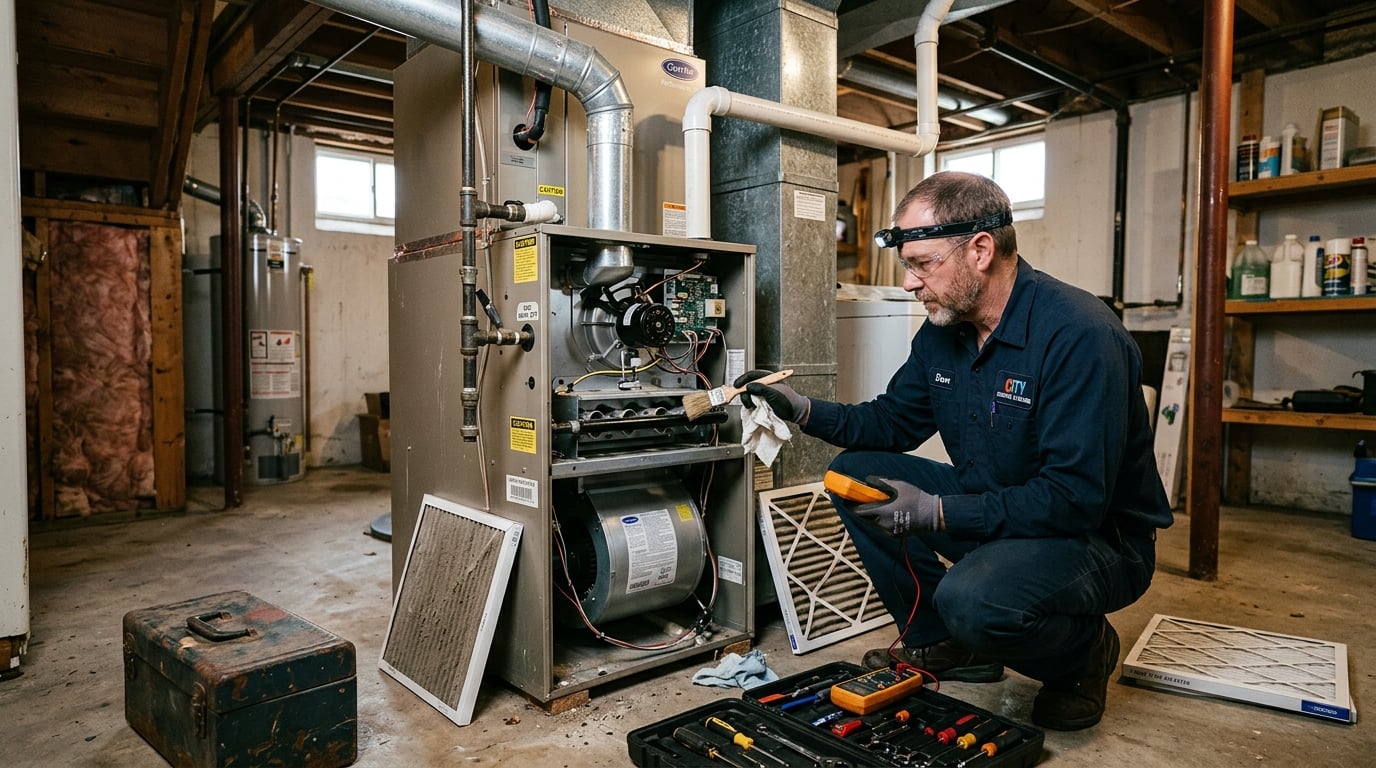
On a cool day, switch the thermostat from cooling to heat and set the temperature several degrees above the current room reading. The furnace should kick on within a minute or two. A light dusty smell for the first few minutes is normal after months of inactivity, but any smell that lingers, along with banging, rattling, or screeching sounds, is a signal to stop relying on the unit and get it checked. While the system runs, walk through the house and confirm that warm air is actually reaching every room, since cold spots can point to duct or blower trouble worth flagging for a technician.
Check and Replace the Air Filter
A clogged filter is one of the most common and most avoidable causes of furnace strain. Checking it monthly throughout the heating season helps catch buildup before it chokes off airflow, and standard one-inch filters typically need replacing somewhere between every 30 and 90 days depending on household conditions, pets, and filter type. A furnace working against a dirty filter runs hotter and longer than it should, which adds wear to components that are much more expensive to replace than a filter.
Clear Vents and Furnace Clearance
Furniture, rugs, and curtains pushed up against supply and return vents block the airflow a furnace depends on to heat a home evenly. Walking room to room to clear these obstructions takes little effort and immediately improves circulation. It is also worth giving the furnace itself some breathing room: heating safety guidance calls for at least 3 feet of clearance between a furnace and anything combustible, a simple rule that protects both the equipment and the household.
High-Efficiency Furnace Blind Spots
High-efficiency furnaces are common across the Quad Cities, and they come with a couple of quirks that standard furnace checklists tend to skip entirely. These units vent differently than older models, which means a homeowner needs to know where to look.
Outdoor Intake and Exhaust Vents
Rather than venting through a traditional chimney, high-efficiency furnaces typically run PVC pipes out through an exterior wall to handle both intake air and exhaust. Leaves, nests, ice, and snow can all block these openings, and when that happens, the furnace’s control system often shuts the unit down as a safety measure. Finding these pipes outside before winter and checking them periodically through the season, especially after a heavy snowfall, keeps one of the most common no-heat calls from ever becoming a problem.
Condensate Drain Freeze-Ups
High-efficiency furnaces extract extra heat from combustion gases, which creates condensation that needs somewhere to go. That water travels through a drain line, and if the tubing is kinked or exposed to cold enough conditions, it can freeze solid and halt drainage entirely. A frozen or blocked condensate line will trip a safety switch and shut the furnace down, often at the worst possible moment. A seasonal inspection typically includes checking and cleaning this drain line to confirm water is flowing the way it should.
What a Professional Tune-Up Covers
Some furnace components involve combustion, gas lines, or electrical systems that are not safe or practical for a homeowner to inspect alone. This is where a scheduled visit from a qualified technician earns its value, catching issues that a visual walk-through simply cannot reveal.
Heat Exchanger and Carbon Monoxide Risk
The heat exchanger keeps combustion gases separate from the air that circulates through the house, and over time it can develop cracks or corrosion that go unnoticed without a close inspection. A compromised heat exchanger can allow combustion byproducts, including carbon monoxide, to mix with the warm air blowing through the vents. This risk carries real safety stakes and is nearly impossible to detect without training, so it belongs firmly in the professional-inspection category rather than the DIY list.
Burners, Ignition, and Blower Inspection
A technician examines the burners for dirt or wear and tests the ignition system to confirm it lights reliably every time, since unreliable ignition is a frequent cause of a furnace that will not start on a cold morning. Blower assemblies also collect dust that reduces airflow efficiency, so professional maintenance typically includes inspecting and cleaning that component along with checking electrical connections and motor operation. Spotting a motor under strain during a fall visit is far better than catching it during a breakdown in January.
Venting, Safety Controls, and Thermostat Checks
Beyond the furnace itself, a thorough tune-up includes inspecting the flue or venting system for blockages, leaks, or poor connections that could prevent combustion gases from venting outdoors properly. Technicians also test safety controls to confirm they respond correctly and check that the furnace completes a full, normal heating cycle. Thermostat accuracy gets checked too, often by comparing temperature readings between the return and supply ducts to see how well the system is actually performing.
Warning Signs That Need a Technician
A handful of symptoms call for professional attention rather than a wait-and-see approach. Recognizing these early can mean the difference between a routine repair and a full system failure in the middle of a cold snap.
- The furnace fails to start at all during a test run, even after checking the thermostat settings and power supply
- Persistent unusual odors continue beyond the first few minutes of a heating cycle, rather than fading like typical start-of-season dust smell
- Banging, grinding, screeching, or rattling noises occur during operation
- Some rooms stay noticeably cold while others heat normally, suggesting a duct, blower, or zoning issue
- The condensate line on a high-efficiency unit shows signs of freezing or the furnace shuts off unexpectedly during cold weather
Any of these signs is a reasonable moment to stop troubleshooting independently and call for help.
Early Prep Prevents Winter Breakdowns
Furnace trouble rarely announces itself with plenty of warning, which is exactly why fall is the right time to look for small issues before they become big ones. A homeowner who runs a test cycle, swaps out a dirty filter, and clears vent obstructions has already handled the tasks that make the biggest everyday difference. Pairing that effort with a professional look at the heat exchanger, burners, venting, and safety controls rounds out the picture, catching the issues that are invisible without training and tools.
For anyone ready to get ahead of the cold weather, Northwest Plumbing, Heating & AC has more resources describing a furnace tune-up before winter as one of the simplest ways to head off an unexpected breakdown when temperatures drop.
Northwest Plumbing, Heating & AC
5885 Tremont Ave
Davenport
IA
52807
United States
