

NEURA Robotics (“NEURA”) today introduced Neuron AI, its multimodal foundation model for Physical AI. Combining 3D vision, touch, audio, robot state and language with memory, Neuron AI enables robots to act on information beyond what cameras alone can capture, as well as retain relevant context when objects disappear from view. Its Perception-Language-Action (PLA) architecture connects what a robot sees, hears and feels with what it has already done, turning multisensory information into physical action.
This press release features multimedia. View the full release here: https://www.businesswire.com/news/home/20261013482085/en/
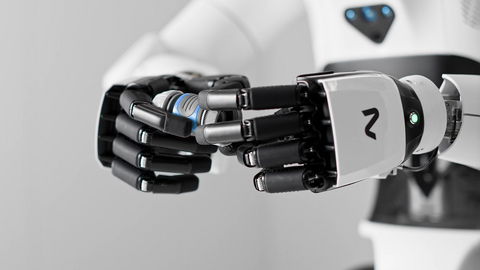
Neuron AI: The Brain of the Physical World
“An intelligent robot needs a brain that brings its senses together and remembers what happened,” said David Reger, Founder and CEO of NEURA Robotics. “With Neuron AI, we are building the brain of the physical world: Physical AI that turns human expertise and physical experience into capabilities robots can learn and apply. Developed in Germany, built for the world.”
Multimodal by design: how Neuron AI perceives the physical world
Cameras capture geometry, color and position, but provide no information about contact, force or sound. Humans also rely on more than sight: they feel whether a screw has caught and hear when a connector clicks into place. Neuron AI applies this principle to robots. Rather than treating each sensor as a separate input, the model encodes 3D vision, tactile and force data, audio, robot state and language, aligns them in one shared space over time, and turns them into a single stream of action.
Multisensory perception matters most for tasks that cameras cannot solve on their own. When a robot opens a lock, only sound and touch confirm that it is really open. With touch, a robot can grasp objects it cannot see. The additional senses also improve tasks that vision can already handle: in welding, for example, the quality of a seam can be judged from the sound of the process.
In addition, Neuron AI has a memory function. To act in the physical world, a robot needs a sense of cause and effect and object permanence, the ability to remember objects when they are out of sight, which humans acquire in their first two years of life. Unlike purely digital AI, a robot acts in a continuous physical world and must keep track of objects and the consequences of its own actions over time, often without seeing them. NEURA adapted the model’s architecture specifically to introduce memory and trains it on dedicated datasets that make use of it.
Three data pillars, one model for every embodiment
Neuron AI is trained on three complementary sources of physical experience:
- Real-world robot data: Robots across different embodiments perform tasks in NEURA Gyms, NEURA’s training infrastructure for cognitive robots and Physical AI and real-world environments, generating synchronized vision, touch, force, audio and movement data.
- Simulation-amplified data: NEURA’s Data Amplifier and simulation stack expand training data through simulated variations of tasks and environments.
- Human demonstration data: People wearing sensor-equipped data suits capture human movements and task demonstrations, bringing practical expertise into the training pipeline.
Together, these pillars combine real physical interactions, simulated variation and human know-how to train a shared foundation across five NEURA robot embodiments, with different grippers and hands.
From learning a skill to deploying it across a fleet
The NEURA Gyms connect data collection, skill training and benchmarking before deployment. Training data and skills developed in the Gyms inform subsequent model releases.
The Neuraverse provides the platform for deploying and updating these capabilities across robot fleets. It also gives customers tools to fine-tune the model for their own tasks, turning process expertise into robot skills. Customers can keep their skills private. Where they choose to share skills or deployment data, those contributions can support the wider ecosystem and future model development. This makes Time-to-Skill a central measure of progress: how quickly a robot can learn a new task and perform it reliably. For industrial customers, shortening that time is essential to bringing Physical AI into more processes and adapting it as requirements change.
Physical AI built in Germany
Neuron AI was developed and trained in-house in Metzingen, Germany. NEURA brings together the robots, hands, sensing technology, data infrastructure and AI development needed to connect model training with physical performance. Germany’s industrial base provides an important setting for this work: complex manufacturing processes, specialized expertise and demanding operating environments. Data partnerships with industrial companies including Schaeffler and Bosch complement training in the NEURA Gyms. For NEURA, this proximity connects the development of Physical AI with the knowledge and practical requirements of the industries it is intended to serve.
Live demonstration at NVIDIA GTC Berlin 2026
At NVIDIA GTC Berlin 2026, NEURA will demonstrate its humanoid robot 4NE1 (“For Anyone”) performing an eleven-minute laundry-handling sequence with the current version of Neuron AI. The sequence includes sorting laundry, loading a washing machine, closing and reopening it, unloading it and transferring the laundry to a dryer, without human intervention. The demonstration focuses on handling and task coordination within the laundry process. The challenge extends beyond any individual movement. The robot must carry relevant context through the sequence, complete each step and transition to the next. It brings NEURA’s architecture into one tangible example: planning, multisensory perception, memory and physical action working together. Visitors can see the demonstration at Station-Berlin, Hall 3, Booth #3031, from October 20 to 22.
More information on Neuron AI: https://neura-robotics.com/neuron-ai
About NEURA Robotics
NEURA was founded on the conviction that the next great technological revolution will not take place on screens, but in the physical world. As aging societies, labor shortages and the growing demand for skilled work reshape economies worldwide, Physical AI is becoming indispensable to safeguarding productivity, prosperity and quality of life.
Founded in 2019 and headquartered in Metzingen, Germany, NEURA Robotics is a global Physical AI company developing the technologies that enable intelligent machines to learn, adapt and work side by side with people in the real world. The company develops cognitive robots that can see, hear, feel and learn, as well as the software, AI and data infrastructure required to deploy them at scale.
A large share of global gross domestic product is generated today through physical work. NEURA’s mission is to make physical work scalable, drastically shortening the time it takes to teach machines new skills and deploy them worldwide. With its cognitive robots, the NEURA Gyms and the Neuraverse, an open ecosystem in which robots continuously learn and share skills, the company is building the foundation for a future in which intelligent machines help to solve some of humanity’s greatest challenges. NEURA Robotics builds Physical AI from Europe, together for the world.
View source version on businesswire.com: https://www.businesswire.com/news/home/20261013482085/en/
Media gallery