
California Waste Solutions is adding AI scanners in Oakland to track material flow, identify missed recyclables and improve recovery in real time.
OAKLAND, CA, UNITED STATES, September 9, 2026 /EINPresswire.com/ — California Waste Solutions is making two targeted technology upgrades across its Bay Area material recovery facilities. It is expanding Pellenc optical-sorting capacity at the Timothy MRF in San Jose and installing EverestLabs artificial intelligence scanners at the 10th Street MRF in Oakland. The projects address different parts of the same operating challenge: identifying more recoverable material, improving the quality of sorted products and giving facility teams better information about what is moving through the line.
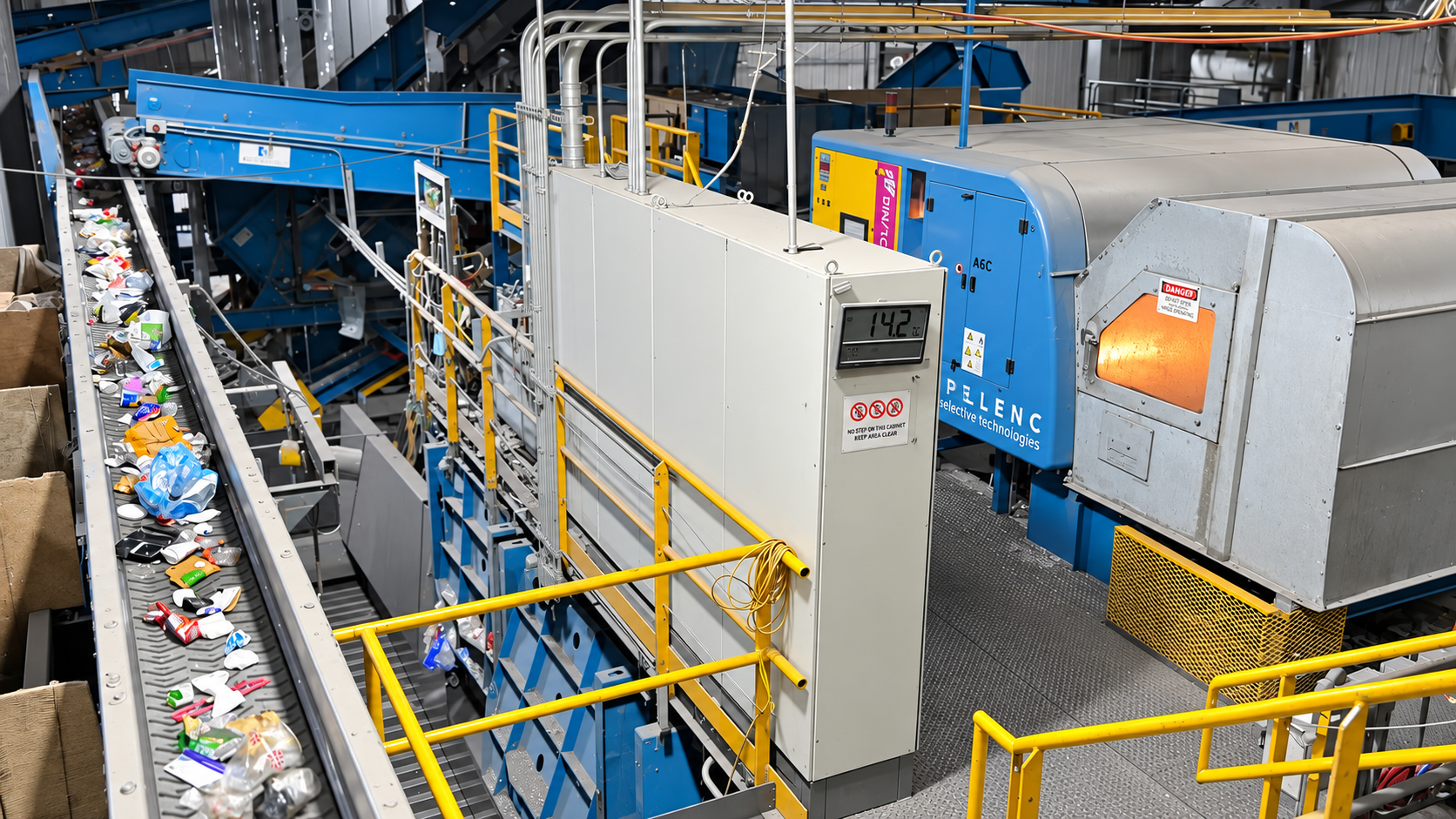
The San Jose project increases the capacity of existing Pellenc optical sorters, strengthening the facility’s ability to recognize materials, recover targeted commodities and produce cleaner output streams. In Oakland, the new EverestLabs scanners will use AI to recognize and report items entering the container line and headed toward disposal. By counting what the system sees and tracking material flow, California Waste Solutions will gain a more detailed view of where recoverable items are being lost and where line conditions can be improved.
“As a family-owned company we put service and solutions before profit and have invested consistently in the most environmentally-sound, client-supportive technologies,” said David Duong, Founder and Chief Executive Officer of California Waste Solutions.
Two Facilities, Two Complementary Upgrades
At the Timothy material recovery facility in San Jose, California Waste Solutions is increasing the capacity of its Pellenc optical sorters. Optical sorting uses sensors to recognize materials moving at high speed and separate selected commodities from the broader recycling stream. Increasing sorter capacity helps the facility recognize targeted products, recover them from the line and improve the purity of material prepared for market.
The Oakland project has a different purpose. At the 10th Street MRF, California Waste Solutions is installing AI scanners from EverestLabs to observe material entering the container line and report what the system sees before it is destined for disposal. By counting those items, the system creates an operating record of what reaches the end of the process, allowing facility teams to identify recurring patterns instead of relying only on periodic observations.
The scanners will also report belt burden depth and the amount of exposed belt surface, giving operators information about how much material is moving past sorters. A sorting line can be harder to work when the burden is too deep or material arrives unevenly. Better information about belt conditions can help operators control material flow so employees have a clearer opportunity to recover targeted items.
AI That Turns the Conveyor Into Measurable Data
Recycling facilities have long measured performance through production totals, quality checks, equipment data and the experience of employees who understand how material behaves on the line. The EverestLabs scanners add continuous item-level observation. Instead of asking only how much material was processed, California Waste Solutions can also examine what the scanners saw, what continued toward disposal and what operating conditions were present.
“First and foremost, we are a family company. Every employee at California Waste Solutions is a member of our own family. What this means is a customer-first centricity which translates into empowering employees to make decisions and supports them with new technologies,” said Michael Duong, President of California Waste Solutions.
The purpose is not to remove judgment from the sorting floor. The data gives employees another way to investigate what they are already seeing. If a recyclable material repeatedly appears in scanner data near the end of the line, facility teams can examine the upstream process, equipment settings, belt loading and sorting conditions that may be contributing to the loss.
An AI scanner can recognize and count objects, but a material recovery facility still depends on operators, sorters, mechanics and supervisors who understand the equipment and incoming stream. The system’s value will come from how effectively employees use the information to adjust the operation.
Recovery and Purity Are Different Measures of Performance
The projects highlight two different measures of performance. Recovery is about capturing more recyclable material that should be separated from the stream. Purity is about how clean the finished commodity is after sorting. A facility can improve one without automatically improving the other, which is why California Waste Solutions is investing in both sorting capacity and better operating data.
At Timothy, increased Pellenc capacity is aimed at recognition, recovery and product purity. At 10th Street, the EverestLabs scanners will help quantify what reaches the end of the container line and provide information about belt burden and material flow. Together, the upgrades give California Waste Solutions more visibility into the effectiveness of the separation process and the conditions under which employees are sorting.
This is especially relevant in a recycling stream that changes from load to load. Packaging formats, the mix of materials and contamination can alter how material moves through equipment. A line that performs well under one set of conditions may require different settings or flow control under another. More precise observation makes those changes easier to identify and address.
California Waste Solutions has used optical-sorting technology in its U.S. facilities since the mid-2000s. The current projects build on that experience while recognizing that each technology serves a different purpose. In San Jose, the focus is greater optical-sorting capacity. In Oakland, the focus is AI-based visibility into what the line is seeing and what may still be escaping recovery.
A Measured Path Toward Robotics and Additional Optical Sorting
The Oakland scanner installation will also create a stronger data foundation for future decisions. A next phase under consideration could include robotic sorting, additional optical sorting or a combination of the two. California Waste Solutions has not treated those options as predetermined. Scanner data will help show where another recovery technology could provide the greatest operating value.
Robotics and optical sorters solve specific problems. Adding equipment without understanding the material being missed can increase complexity without improving recovery. By first measuring what is moving toward disposal, how often it appears and under what belt conditions, California Waste Solutions can make its next investment against a clearer operating picture.
Wendy Nguyen
California Waste Solutions
wendynguyen@calwaste.com
Visit us on social media:
LinkedIn
Instagram
Facebook
YouTube
Legal Disclaimer:
EIN Presswire provides this news content “as is” without warranty of any kind. We do not accept any responsibility or liability
for the accuracy, content, images, videos, licenses, completeness, legality, or reliability of the information contained in this
article. If you have any complaints or copyright issues related to this article, kindly contact the author above.

Media gallery