
Jinan, Shandong Mar 27, 2026 (Issuewire.com) If you’ve followed online manufacturing forums over the past five years, you’ve likely noticed a shift in conversations about Chinese CNC equipment. A decade ago, discussions focused on cheap clones and inconsistent quality. Today, more small shop owners are reporting positive experiences with lesser-known Chinese brands, praising their 3-axis routers for holding tolerances for years or 5-axis units that offer 80% of the performance of German or Japanese models at a fraction of the cost.
This change isn’t just generic manufacturing maturation. For many mid-tier Chinese firms, it’s the result of deliberate investment in R&D and patents, moving beyond copying to solving specific pain points for their core customers. Take ROCTECH, a Jinan-based CNC manufacturer founded in 2010. It represents dozens of mid-sized firms quietly capturing the lower and middle segments of the global market.
R&D Team: Small, Experienced, and Focused
ROCTECH’s R&D team has only 15 memberstiny compared to the hundreds employed by industry giants. However, most have over 15 years of experience in the CNC industry, many having previously worked for state-owned Chinese firms or joint ventures with Western brands. This depth of experience allows them to identify and address specific issues faced by small and mid-sized shops that larger players often overlook.
For example, many small woodworking or aluminum shops lack climate-controlled facilities, where temperature fluctuations can affect machine accuracy. ROCTECH’s team has iterated on frame rigidity and thermal compensation features to address this exact issue, benefiting from the agility that a smaller, focused team provides.
Patent Strategy: Targeted and Practical
This team structure fuels a patent strategy that breaks from the old playbook. As of 2024, ROCTECH holds 50 patents, adding about 10 annually. While this pales next to a giant like Haas, it’s significant for a firm of its size. Crucially, most are utility patents (covering functional improvements like high-rigidity gantry designs or improved dust extraction systems), not just design patents (which only protect appearance).
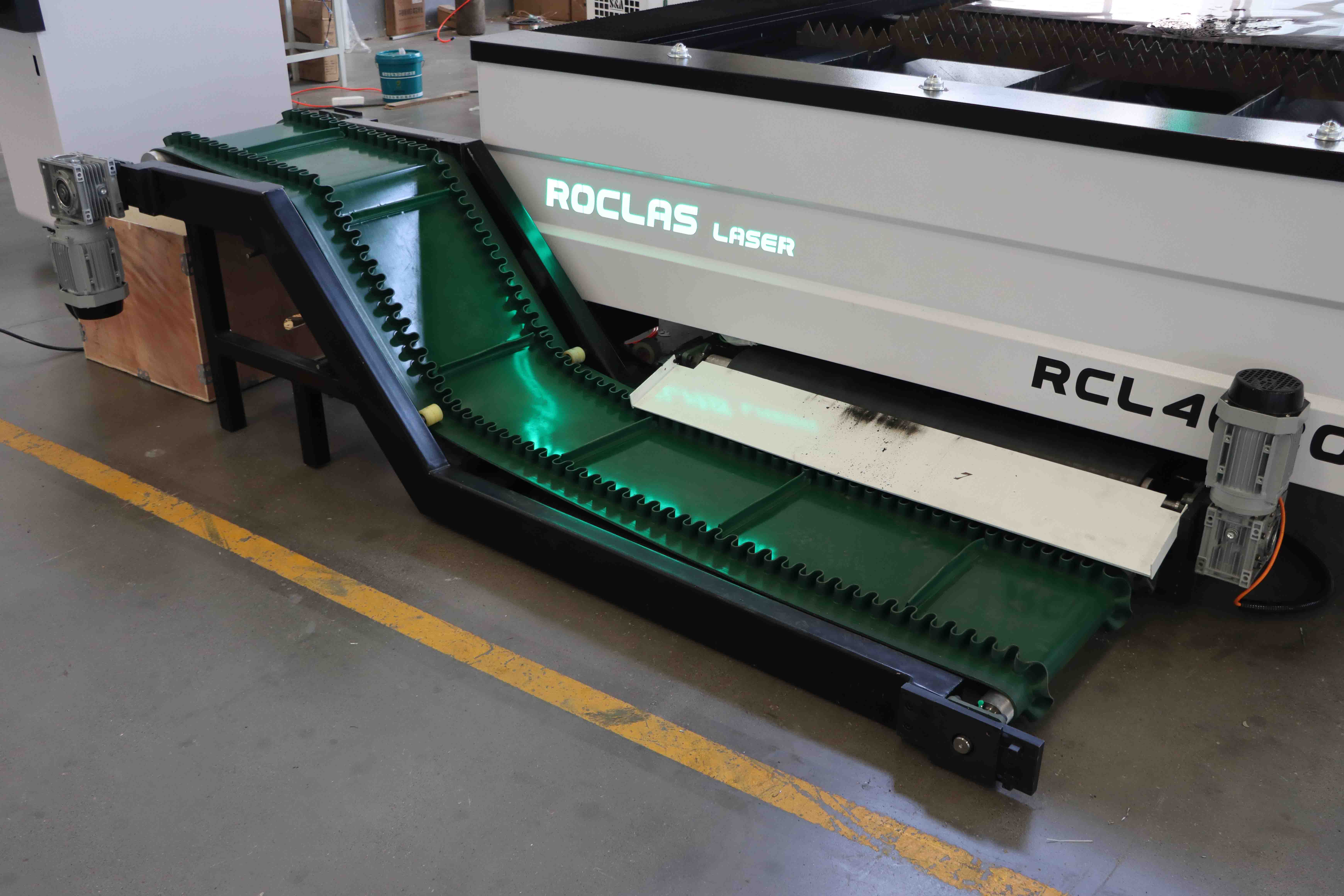
Their strategy isn’t about filing broad, market-dominating patents. Instead, they focus on narrow, use-case-specific patents that directly enhance their product lines. A recent example is a modified workholding system for EPS foam cutting that reduces material wastea tangible improvement for a specific customer subset without requiring massive R&D investment.
Product Evolution Driven by IP
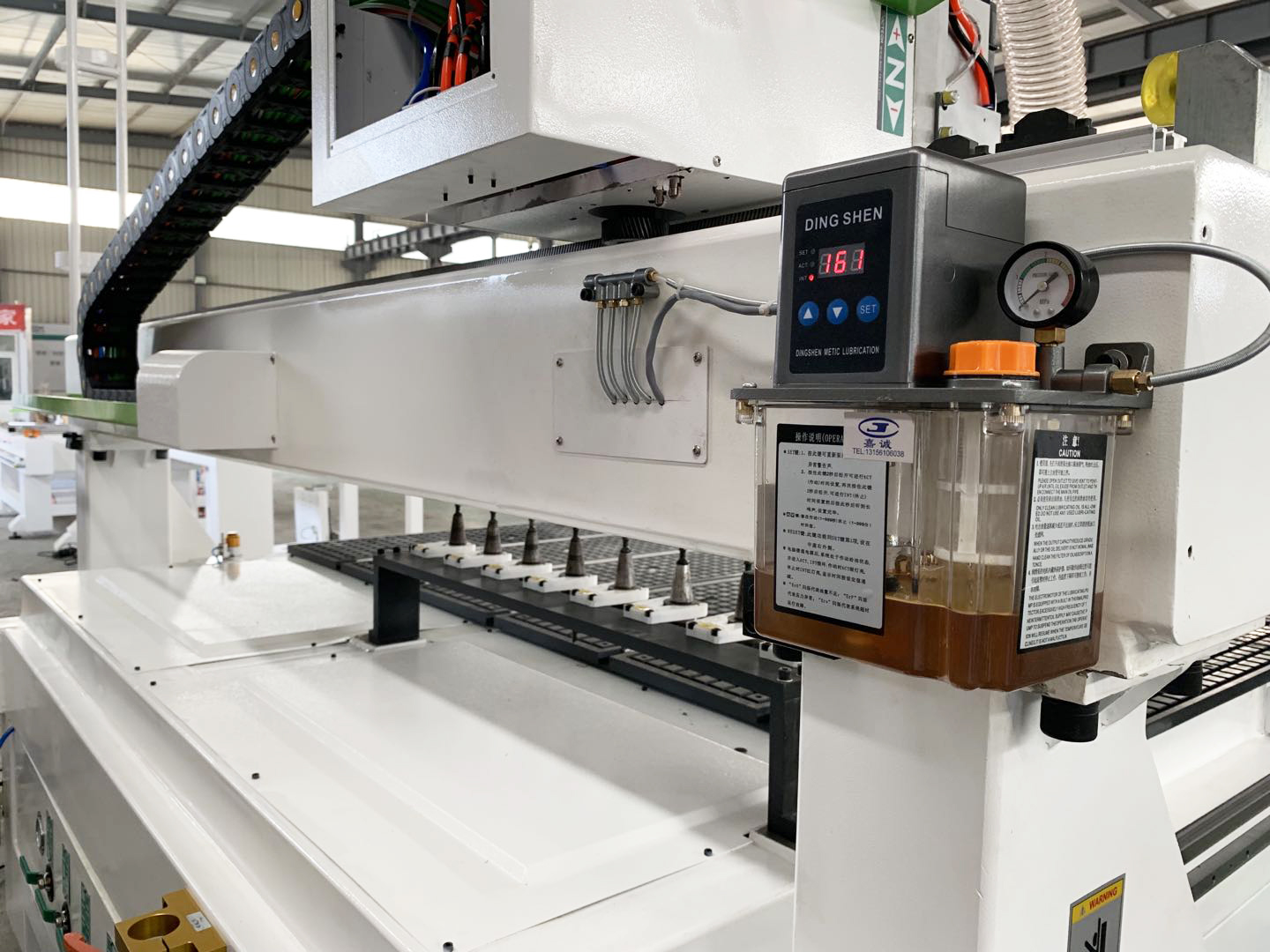
This focus on incremental, practical IP drives tangible product improvements. A decade ago, their base 3-axis woodworking router had a positioning accuracy of about 0.05mm, typical for low-cost Chinese machines at the time. Through patents around frame rigidity, vibration damping, and calibration, they’ve pushed that to 0.01mm, with spindle speeds up to 24,000 rpm. This accuracy now rivals entry-level European and North American models costing two to three times more. IP around power management has also reduced energy consumption by roughly 20% compared to similar Chinese machines, a major selling point in regions with high electricity costs.
Realistic Limitations and Trade-offs
Of course, there are limitations. While 0.01mm accuracy is impressive for the price, it doesn’t match the sub-0.001mm precision of high-end machines for aerospace or medical manufacturing. Their machines excel in woodworking, general aluminum fabrication, sign-making, and foam cutting, but aren’t set to replace top-tier equipment soon. Their small R&D team inherently limits innovation to incremental improvements rather than ground-up new technology.
Additionally, their patent portfolio is concentrated in China and the EU, with fewer in the U.S., leaving them somewhat vulnerable to copying by domestic competitors if iteration slows. Some users also report that while their custom firmware is user-friendly for basic tasks, it’s less flexible than the open-source or fully customizable systems on more expensive machines, which can be a drawback for specialized work.
Benchmarks and Industry Context
ROCTECH holds ISO 9001 and CE certifications, now essential for Western markets, and offers a 1-year free parts replacement with online support, plus 2-year warranties on some core componentsoften better than the 90-day parts coverage common with some entry-level Western brands.
While exact figures aren’t public, mid-tier Chinese CNC firms like ROCTECH are estimated to spend 5-8% of revenue on R&D, similar to Western counterparts. However, lower engineering costs in China mean that the budget goes further, sustaining a capable 15-person team. Their output of 10 patents a year outpaces comparable Western firms (which often file 3-5), though Western patents tend to be broader, covering core technologies, while ROCTECH’s are narrower and feature-specific.
The Big Picture
The Chinese CNC manufacturing space is splitting. On one end, low-cost copycats compete solely on price with minimal R&D. On the other, firms like ROCTECH are building legitimate innovation pipelines, leveraging experienced teams and targeted patents to compete on value, not just cost. This pushes the entire industry to improve quality and lower costs for small and mid-sized shops that can’t afford six-figure machines.
Open questions remain: How will these firms adapt to potential U.S. and EU trade restrictions? Can they move upmarket into high-precision applications, or will they remain mid-tier players? And for shop owners, does the lower upfront cost justify potentially less local support compared to domestic brands? The experiences of those running these machines in their shops will be telling.
Media Contact
roctech
0086 531-86085880
Room 1907, Building A1,Ouyadaguan , Yangguangxin Road, Erqi Street
Source :ROCTECH
This article was originally published by IssueWire. Read the original article here.
