

Dover, Delaware – Nov. 27, 2026 – Virse has combined multi-subject photo merging, two-image artistic blending, architectural perspective leveling, and quick horizon straightening inside its Creative Canvas after publishing four spatial composition tools on November 19. Backed by 40+ AI models including 21 photo engines, the browser release gives real estate editors, brand illustrators, architectural photographers, and storefront designers dedicated geometry and compositing utilities that straighten leaning facades and unify multi-frame subjects on one workspace.
Raw camera captures rarely arrive ready for editorial grids, storefront cards, or property listings. Architectural shooters tilt wide lenses upward to frame tall glass towers, turning straight masonry edges into steep converging triangles across the top third. Real estate photographers juggle crooked handheld room captures that sacrifice doorways, wall molding, or kitchen islands once tightened inside mechanical rotation crops. Meanwhile, brand art directors pairing separate cutout figures or layering botanical silhouettes across textured studio portraits lose entire mornings wrangling stacked layer blend modes, feather radii, and hand-drawn vector masks across heavyweight desktop projects.
Virse moves spatial alignment and multi-frame synthesis onto one visual canvas positioned beside uploaded source photographs. Clean geometry edits take moments. Specialists straighten leaning facades, compare layered double-exposure artwork against source captures, and check composite shadows side by side without dragging four-corner mesh grids or saving bloated multi-gigabyte layered documents.
Combining realistic subjects and blending double exposures
Editorial producers staging two or three separate subject photographs inside one unified frame open the AI image merger node first. Uploading clear studio captures alongside simple seating directions, architectural setting cues, and unified daylight notes merges independent shots over grounded contact shadows and natural relative scale. Retail stylists place an unlit ceramic table lamp beside an oak lounge chair, linen pillow, and woven rug on screen before hauling heavy warehouse samples onto a studio set. Virse keeps functional expectations grounded: multi-image merging creates realistic composite previews rather than guaranteed facial identity locks across multiple people, exports flat raster JPG or PNG files without editable layers, and expects quick human review of hands, limb proportions, and floor contact edges across group portraits, packaging setups, and staged furniture mockups prior to final press export.
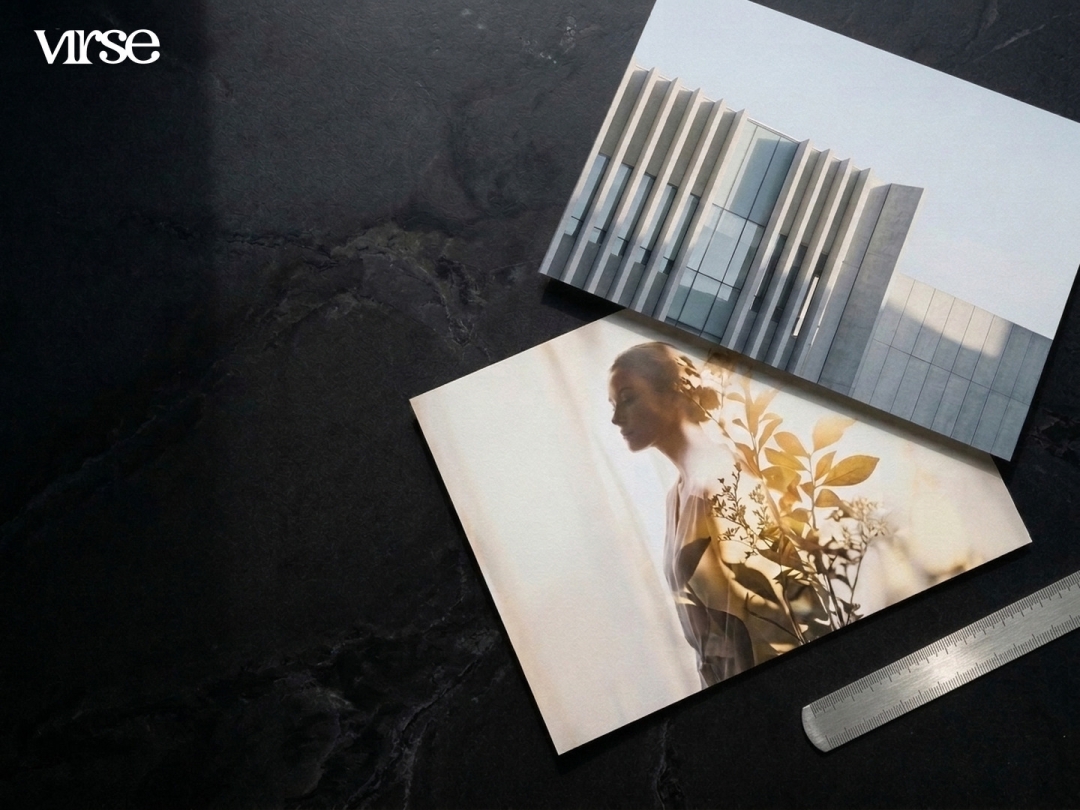
Art directors crafting expressive book covers, festival posters, or editorial openers shift onto an adjacent node for the AI image blender. Unlike realistic multi-subject room staging, this fusion tool joins two chosen frames cleanly into layered double exposures, translucent silhouette overlaps, or stone-and-paper texture prints. Clear cues direct visual weight. Operators note which shot anchors main foreground silhouette geometry and which contributes warm botanical leaves, overcast water ripples, or handmade cardstock texture. Explicit separation keeps double-exposure blending distinct from both Virse’s cutout edge-masking utility and multi-subject realistic scene merging, replacing opacity menus and manual eraser brushes with short written blend directions so illustrators and layout designers compare translucent texture mixes side by side.
“Crooked verticals and clashing light directions across multi-shot layouts stall routine approvals far longer than creative directors expect,” said a spokesperson for Virse. “Housing realistic subject merging, double-exposure blending, perspective straightening, and horizon correction on one workspace lets photographers finish visual geometry and composite proofs with clear boundaries.”
Correcting architectural perspective and tilted horizons
Building photographers, storefront designers, and interior stylists fix upward wide-lens convergence with the photo perspective correction generator. Uploading leaning building towers, skewed exhibition walls, angled retail displays, or slanted carton faces alongside plain geometric notes restores upright vertical columns and parallel horizontals cleanly without pushing images through reverse 3D tilt presets or stylization filters. Architecture and real estate teams review corrected facades beside untouched originals on one canvas, cutting turnaround delays prior to listing approvals. Because semantic perspective correction omits interactive four-point corner drag grids and survey calibration tables, Virse handles missing outer corner triangles through generative border completion and recommends reviewers inspect brickwork lines, signboards, and window mullions carefully prior to final client handoff.
Travel shooters, portrait retouchers, and event archivists level casual handheld tilt inside the straighten image online utility. Choosing tight border trim preserves strictly captured optical pixels across ocean horizons, harbor skylines, and studio backdrops, whereas requesting smart outer-edge fill rebuilds rotated corner sky and ceiling edges that standard cropping rotation would slice away cleanly. Removing fixed manual degree dials keeps quick horizon leveling approachable inside any standard browser while reminding editors to inspect rebuilt perimeter corners whenever edge synthesis runs across wide coastal views, gallery ceilings, or tiled shopfront interiors needing freshly filled corners.
Every composition and geometry utility published November 19 operates natively alongside Virse Composer for local revisions, Aesthetic Memory for recurring lighting habits, and shared team Asset Folders on the Creative Canvas. Free accounts launch with 200 compute credits and collect 50 refill units daily whenever remaining balances sit below 200 for 1K static images across all 21 hosted image engines. Paid tiers step through Basic at 1,000 monthly compute credits, Pro at 3,000 credits plus unlimited selected fast 1K generation, multi-tier Max memberships adding 2K, 4K, and hosted video synthesis, and Business workspaces seating up to 50 collaborators with non-expiring subscription and refill credits across distributed retouching teams. Studio coordinators sort composite proofs, straightened property stills, and layered poster banners into labeled client folders while exporting final campaign deliveries.
About Virse
Virse develops a collaborative visual AI canvas built by computer vision researchers and industrial design leaders holding over 100 international design distinctions across digital software and physical products. From its Dover, Delaware base, Virse brings 40+ AI image, video, and text engines together with Virse Composer, Aesthetic Memory, and organized team Asset Folders. Photography teams, creative agencies, and e-commerce publishers rely on Virse to level raw captures, compose realistic scenes, and finalize visual layouts on one screen.
Media Contact
Company Name: Virse
Contact Person: Media Relations
Email: Send Email
Address:8 The Green, Ste R
City: Dover
State: Delaware 19901
Country: United States
Website: https://www.virse.ai/
Press Release Distributed by ABNewswire.com
To view the original version on ABNewswire visit: Virse Unites Image Merging, Double Exposure Blending, and Perspective Fixes