
CHENGDU, SICHUAN, CHINA, November 20, 2026 /EINPresswire.com/ — # China Best Infrared Light Device Manufacturers?
Picking the best infrared light device manufacturers in China involves more than comparing prices or product images. Reliable suppliers should demonstrate engineering expertise, consistent production, and transparent quality records. Buyers should evaluate how manufacturers design, test, and support infrared equipment for professional and consumer applications.
Important factors include wavelength accuracy, output consistency, thermal management, optical safety, and electrical protection. Request calibration reports, material specifications, and documented quality procedures. Factory visits can help verify assembly conditions, component traceability, and final inspection processes.
Manufacturers should clearly explain testing limitations and potential performance differences between models, users, and operating environments. Buyers should also verify compliance documents for their target markets, review factory capabilities, lead times, warranty coverage, and after-sales support.
Ultimately, selecting a manufacturer means finding a partner with practical experience, transparent documentation, responsible production, and dependable performance.
## Infrared Light Device Market Scope: 850 nm and 940 nm Applications
China’s infrared light device market serves consumer wellness, optical sensing, security equipment, and industrial inspection. The 850 nm wavelength typically produces more visible red leakage and offers higher camera sensitivity, making it suitable for imaging systems, pulse monitoring, and short-distance sensing. The 940 nm wavelength is less visible to the human eye and is commonly used in discreet illumination, remote controls, and night-vision applications.
Buyers should match wavelength, output power, beam angle, and duty cycle to their intended applications. Reliable manufacturers should provide optical test reports, thermal data, and production traceability. Request irradiance measurements at a specified distance rather than relying solely on LED power. Check wavelength tolerances, as nominally identical 850 nm devices may perform differently between batches.
During factory audits, inspect calibration equipment, soldering quality, enclosure sealing, and aging-test procedures. Request samples from different production runs and evaluate performance after repeated heating and cooling. Certification documents should correspond to the actual product model and destination market. Technical support is particularly important for customized optics or control settings.
## Key Performance Metrics: Irradiance, Wavelength, Beam Angle, and MPE
Selecting an infrared light device requires more than checking LED counts. For an Infrared Facial Device, irradiance should be measured at the skin rather than at the diode. A value such as 20–60 mW/cm² may support consistent home-use dosing, but higher output is not automatically better. Dose is calculated by multiplying irradiance by exposure time. For example, 40 mW/cm² for ten minutes delivers 24 J/cm².
Independent laboratory testing should verify output uniformity across the forehead, cheeks, and jawline, since hot spots may affect actual exposure. Near-infrared systems commonly use approximately 810–850 nm, while red wavelengths often range from 630–660 nm.
Beam angle influences coverage, as narrow beams may create bright centers and dim edges. Manufacturers should publish spectral width, optical power, and test distance. Maximum Permissible Exposure (MPE) must be assessed according to wavelength, exposure duration, viewing geometry, and distance. IEC 62471:2006 provides photobiological safety assessment methods, while ICNIRP guidance addresses exposure limits and measurement conditions. Buyers should be cautious when product specifications omit these details.
## China’s Manufacturer Landscape: OEM, ODM, and Medical-Grade Suppliers
China’s infrared manufacturing landscape includes OEM, ODM, and medical-grade suppliers. OEM factories manufacture products according to customer drawings, including LED layouts, housings, and control panels. ODM suppliers offer existing platforms that can be customized with different wavelengths, timers, and packaging. ODM services may shorten development time, although shared designs can limit exclusivity.
Medical-grade suppliers require more extensive evidence, including irradiance testing, thermal controls, electrical safety documentation, and production traceability. Market growth does not necessarily prove treatment effectiveness, so buyers should verify actual device output and stability at the intended operating distance.
Request batch-level test records, wavelength tolerance data, and complete testing documentation. For an Infrared Therapy Device, confirm whether the supplier supports OEM documentation or full ODM engineering. Medical-grade claims should be supported by appropriate evidence rather than appearance or prototype results.
## China’s Infrared Light Device Manufacturer Landscape
OEM and ODM projects commonly focus on product customization, manufacturing documentation, and quality-system evidence. Medical-grade sourcing adds requirements such as ISO 13485 quality management, IEC 60601-1 electrical safety, IEC 62471 photobiological safety, and market-specific regulatory requirements, including FDA 510(k) or EU MDR compliance where applicable. Requirements vary according to intended use and target market.
## Safety Standards: IEC 62471 Risk Groups and FDA or CE Compliance
Infrared energy is invisible, so skin warmth cannot confirm safe exposure. IEC 62471:2006 evaluates photobiological hazards from lamps and lamp systems and defines four classifications: Exempt, Risk Group 1 (RG1), Risk Group 2 (RG2), and Risk Group 3 (RG3). Safety reports should identify wavelength, irradiance, exposure distance, and duration.
For the United States, FDA obligations depend on product output, intended use, and medical claims. 21 CFR Part 1040 covers applicable radiation-emitting electronic products, while medical claims may create additional registration and premarket requirements. In Europe, CE marking indicates conformity with applicable legislation. Therapeutic products may fall under Regulation (EU) 2017/745. CE marking is not a laboratory safety certificate.
Independent testing should connect photobiological safety results with electrical safety, labeling, biocompatibility, and risk management. Buyers should request original IEC 62471 reports, verify that the tested model matches the supplied product, and check calibration dates and irradiance measurements. Supplier declarations alone may not provide sufficient evidence.
### Photobiological Safety Assessment
IEC 62471 evaluates optical radiation hazards from lamps and lamp systems, including infrared radiation. Suppliers should provide documented assessments covering operating modes, wavelength range, irradiance, radiance, exposure distance, and duration. Laboratory reports should identify applicable hazard limits and measurement conditions. This is an essential procurement requirement.
### IEC 62471 Exempt Group
The Exempt Group indicates that no reasonably foreseeable photobiological hazard exists under the applicable assessment conditions. Suppliers should provide test results confirming that the product meets exemption criteria, together with specifications and evidence that normal use matches the tested configuration. This classification is preferred when applicable.
### IEC 62471 Risk Group 1 (RG1)
RG1 represents a low-risk classification under the standard’s exposure assumptions, where normal behavioral limitations generally prevent hazardous exposure. Suppliers should provide intended-use limits, treatment distance, session duration, and instructions preventing misuse or prolonged direct viewing. Buyers should verify the risk-group report and matching user instructions. RG1 products may be acceptable when documentation and intended-use conditions are consistent.
### IEC 62471 Risk Group 2 (RG2)
RG2 represents a moderate-risk classification where exposure limitations and aversion responses are important to safety. Suppliers should provide applicable warnings, exposure controls, treatment timers, distance requirements, and eye-protection guidance when justified by the assessment. Buyers should review independent safety reports, product labels, manuals, timer validation, and protective-accessory testing. RG2 products require careful review.
### IEC 62471 Risk Group 3 (RG3)
RG3 is a high-risk classification in which exposure may exceed applicable limits even during brief exposure. Direct viewing and uncontrolled access require strict controls. Suppliers should provide engineering controls, restricted access, interlocks or shielding where appropriate, prominent warnings, and professionally reviewed operating procedures. Buyers should verify the full IEC 62471 report, safety-control validation, labeling, and risk-management documentation. RG3 products require high scrutiny.
### FDA Pathway for the United States
FDA requirements depend on intended use, claims, technological characteristics, and product classification. A 510(k) may be required when a suitable predicate exists, while other pathways may apply. Suppliers should provide the defined U.S. intended use, accurate labeling, device listing and establishment registration when applicable, quality-system controls, and required premarket documentation or exemption rationale.
Buyers should verify FDA database records, clearance documentation when applicable, U.S. labeling, and whether marketing claims match the authorized use. These checks are required for products entering the U.S. market.
### CE Marking Under the EU MDR
CE marking indicates conformity with applicable EU requirements, rather than serving as a universal product-quality mark or general approval issued by the European Commission. Suppliers should provide technical documentation, clinical evaluation where required, risk management, post-market surveillance, conformity assessment, and an EU Declaration of Conformity.
Buyers should verify the declaration, CE label, technical-file index, notified-body certificate when required, and authorized-representative information for non-EU manufacturers. These documents are required for the EU market when applicable.
### EU MDR Device Classification
Active therapeutic devices that administer or exchange energy may fall under MDR classification rules. The final class depends on intended purpose and whether the energy could be potentially hazardous. Suppliers should provide a written classification rationale covering claims, energy output, application site, duration, and foreseeable risks. Buyers should review the classification memo, risk analysis, conformity-assessment route, and clinical-evaluation documentation. This is an essential sourcing checkpoint.
### Electrical and Mechanical Safety
Applicable IEC or EN standards may address electrical shock, fire, temperature, mechanical hazards, electromagnetic compatibility, and essential performance. Suppliers should demonstrate controls for insulation, grounding, thermal management, enclosure strength, abnormal operation, EMC, and power-supply compatibility. Verification should include laboratory electrical-safety and EMC reports, together with production test records. These checks are essential.
### Optical Output Consistency
Therapeutic claims and safety assessments depend on stable wavelength, irradiance, treatment area, distance, and exposure time. Suppliers should provide calibrated measurement methods, defined tolerances, emitter binning or selection controls, and production-batch verification. Buyers should review spectral data, irradiance maps, dose calculations, calibration certificates, and batch-release records. Consistent output is essential.
### Quality-Management System
Medical-device manufacturing should use controlled design, supplier, production, complaint, corrective-action, and change-management processes appropriate to the target market. Suppliers should provide critical-component traceability, inspection plans, controlled work instructions, nonconformance handling, and change notification. Buyers should verify applicable quality certificates, audit results, process records, and sample traceability from components to finished units. This is an essential requirement.
### Labeling and User Instructions
Instructions should accurately state intended use, contraindications or precautions, exposure distance, session duration, cleaning, maintenance, and optical warnings. Suppliers should provide market-specific manuals and labels consistent with the tested product configuration and authorized or declared claims. Buyers should review final artwork, translated manuals, warning symbols, and claim-to-evidence traceability. Complete labeling and instructions are essential.
### Supplier Selection Benchmark
A strong supplier is not defined by certificates alone. Compliance must match the exact model, intended use, configuration, and target market. Qualified manufacturers should provide independent test evidence, controlled production, transparent claims, technical support, corrective-action responsiveness, and complete regulatory documentation.
Buyers should conduct document reviews, sample testing, factory audits, production-unit comparisons, and contract reviews covering regulatory changes. This is a recommended standard for supplier selection.
**Note:** IEC 62471 risk-group results are product- and configuration-specific. FDA registration or listing is not the same as FDA clearance or approval, and CE marking depends on the applicable EU conformity-assessment requirements.
## Quality Systems: ISO 13485, ISO 9001, LED Binning, and Thermal Testing
Choosing among China’s best infrared light device manufacturers requires more than comparing prices. A reliable Led Light Device should come from a factory with documented quality systems and traceable production records. ISO 13485 supports controlled processes for medical-related devices, while ISO 9001 strengthens broader quality management. Certificates matter only when daily procedures match the documentation.
LED binning is another important checkpoint. Manufacturers sort LEDs by wavelength, brightness, and forward voltage to improve output consistency. Ask for binning reports, sampling methods, and acceptance limits, since small variations can affect performance across a treatment panel.
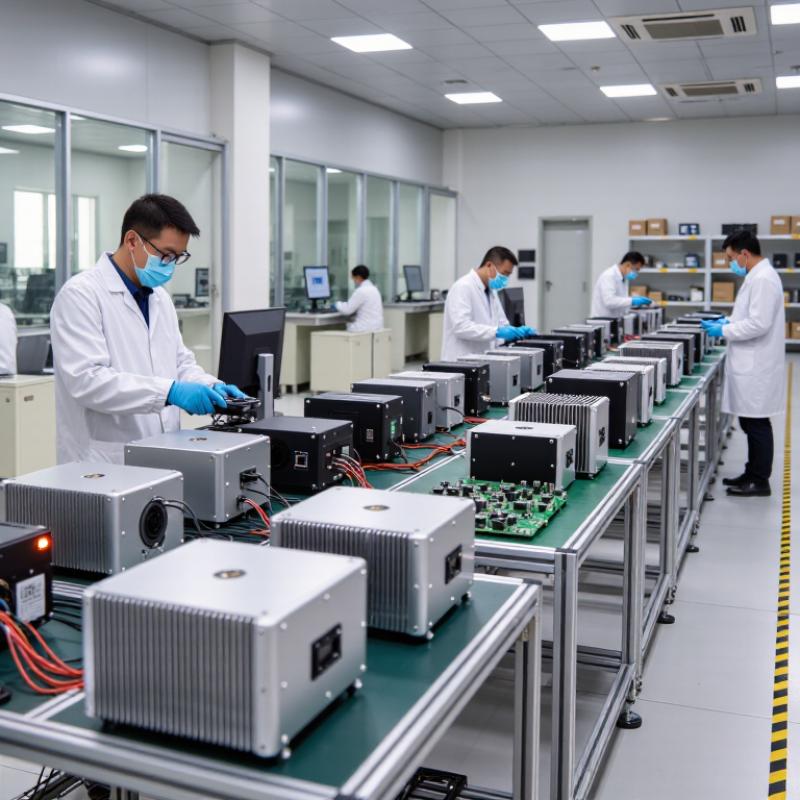
Thermal testing helps reveal problems that visual inspection cannot detect. Manufacturers may operate devices continuously in controlled chambers while measuring surface temperature, internal heat, and output stability. Connectors, circuit boards, and housings should also be evaluated. Suppliers should record test duration, failures, corrective actions, and repeat-test results rather than only successful samples. Factory visits, sample reviews, and independent verification can provide additional confidence before production.
## Manufacturer Selection Criteria: Output, Testing, MOQ, Warranty, and Lead Time
Selecting an infrared light device manufacturer requires more than comparing catalog prices. Ask for measured output at the treatment distance rather than advertised wattage. Reliable suppliers should provide wavelength tolerance, irradiance data, and test conditions. Request samples and check whether actual readings match the reports.
Testing should cover temperature, electrical safety, timer accuracy, and housing durability. Independent laboratory reports add confidence, while factory records demonstrate production consistency.
Confirm the minimum order quantity (MOQ) before discussing customization. A low MOQ may reduce inventory risk but can increase unit costs.
Warranty terms should clearly state coverage, repair methods, replacement limits, and response times. Vague promises should be treated as warning signs.
Ask for production-line videos, sample test reports, and written lead-time schedules. Separate production time from shipping time, as customized housings or packaging may take longer than standard devices. Build a buffer for approval delays and maintain regular communication. Documented specifications and a practical inspection plan help make purchasing decisions more dependable.
## Conclusion
The Infrared Light Device market is shaped by 850 nm and 940 nm applications, serving illumination, sensing, wellness, and industrial requirements. Buyers should examine irradiance, wavelength accuracy, beam angle, operating stability, and Maximum Permissible Exposure (MPE). China offers OEM, ODM, and medical-grade suppliers capable of supporting customized designs, production volumes, and application-specific configurations.
Reliable sourcing also requires safety and quality controls. Manufacturers should provide documentation related to IEC 62471 risk groups and applicable FDA or CE requirements. Quality systems may include ISO 13485 or ISO 9001 certification, LED binning, thermal testing, and long-term output verification.
Before placing an order, compare optical output, testing capabilities, MOQ, warranty terms, lead time, technical support, and traceability. A supplier combining consistent performance, transparent testing, and dependable communication can better support long-term product development.
Brain Health Spectrum (Chengdu) Artificial Intelligence Tech
Brain Health Spectrum (Chengdu) Artificial Intelligence Tech
+ +86 19113573670
nqkgpjoy@gmail.com
Legal Disclaimer:
EIN Presswire provides this news content “as is” without warranty of any kind. We do not accept any responsibility or liability
for the accuracy, content, images, videos, licenses, completeness, legality, or reliability of the information contained in this
article. If you have any complaints or copyright issues related to this article, kindly contact the author above.

Media gallery