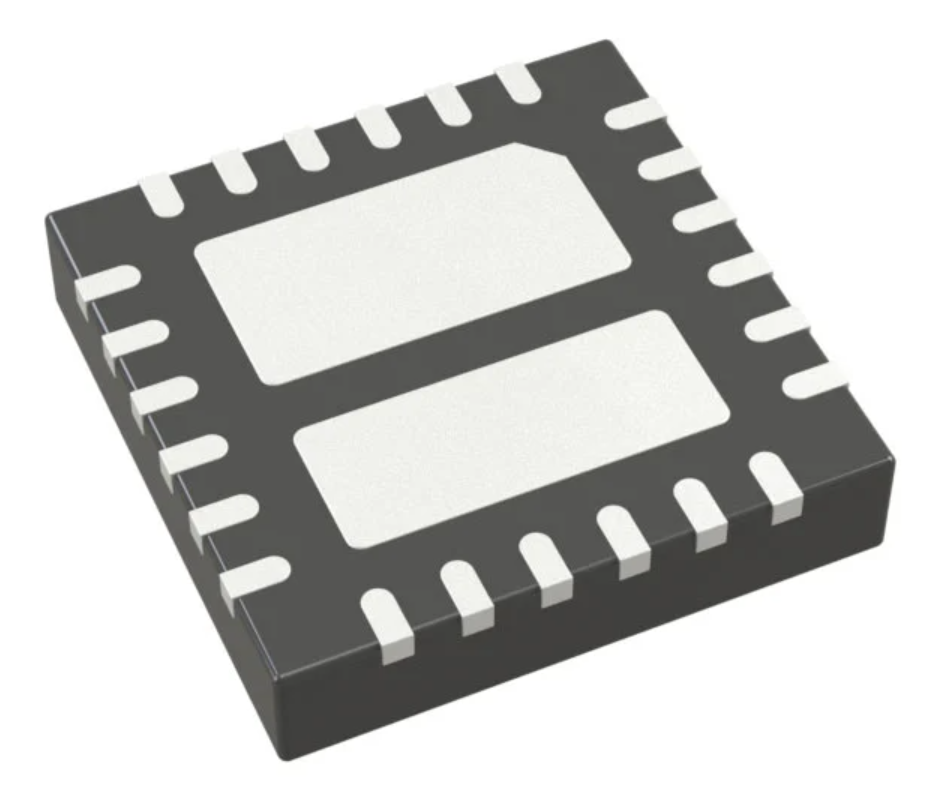

SHENZHEN, GUANGDONG, CHINA, October 15, 2026 /EINPresswire.com/ — During a hot-weather endurance test, an onboard charger module has to hold its output steady while the input voltage swings and the under-hood temperature climbs. The power management IC inside cannot drift, and it cannot start pushing switching noise into nearby sensors. Problems like these are usually solved on the schematic — but they are just as often created by a part quoted at forty weeks, or by a line item that simply is not available on the day the boards go into assembly. That is the point where converter supply for automotive electronics stops being a purchasing detail and becomes an engineering constraint. Conevo Electronics is a Hong Kong–based IC chip distributor working with spot inventory and a global sourcing network, and much of its day-to-day work sits in this gap: DC-DC switching regulators, AC-DC converters, LDOs, gate drivers and power management ICs, verified before shipment and quoted fast enough to protect a build slot.
Technical Demands in Automotive Power Conversion
Modern vehicle electronics depend on layered power topologies to feed dozens of electronic control units from a single battery rail. The move away from simple linear regulators toward high-frequency Buck-Boost stages, Power Factor Correction front ends and GaN switching designs raises power density and cuts heat, but it also raises the difficulty level. Higher switching frequencies mean tighter layout, more careful filtering, and more attention to EMI.
Parts mounted under the hood are expected to regulate accurately from around −40 °C to 125 °C and above, while surviving vibration and load-dump style transients. Consumer-grade power ICs are not built for that. Automotive programs therefore call for AEC-Q100 qualified active devices and AEC-Q200 passives, supported by FMEA documentation. And when a switching node sits close to a radar front end or an infotainment SoC, stray noise can corrupt low-level signals long before anything overheats. Component choice ends up being a design decision with real consequences, not a line filled in at the end.
From Datasheet Selection to Parts in Hand
Picking a suitable switching regulator or DC-DC controller from a catalog is the easy half. Design teams regularly build a power tree around one specific controller, then find during prototype assembly or pilot production that the part carries a long factory lead time, a high minimum order quantity, or allocation limits.
The practical workflow used to close that gap looks roughly like this:
Flagging the items on a BOM most likely to cause trouble — long lead times, MOQ hurdles, or single-source risk.
Searching the global network for genuine, traceable stock that matches the required electrical and thermal specifications, including allocation from overseas markets when local availability is thin.
Cross-referencing automotive-grade regulators, synchronous controllers and power modules to find pin-compatible options.
Comparing candidates on switching frequency, current limit, thermal resistance and package footprint, so a substitution does not quietly change circuit behaviour.
Responding quickly — stock status and quotations returned in short order, since a delayed answer is often as damaging as a shortage.
Inventory authenticity is treated as part of the same process. Stock offered is checked for traceability and inspected before dispatch, because a mislabelled regulator discovered at ICT costs far more than the part itself.
Lifecycle Tracking After Design Freeze
Once a power architecture is nominated for series production, that BOM often has to stay buildable for seven to ten years. Semiconductor suppliers, meanwhile, keep adjusting their portfolios and issue Product Change Notifications or End-of-Life notices for older process nodes and package styles. Obsolescence discovered mid-programme can force a redesign and a fresh round of qualification testing.
For this reason CONEVO keeps an eye on lifecycle status well after layout sign-off, including packaging shifts across QFN and TSSOP variants that affect thermal behaviour. When a regulator or driver moves toward EOL, compatible drop-in or pin-compatible alternatives are identified early, and the information is passed on while there is still time to evaluate a substitute, run validation, and place a last-time buy. Continuity of supply, in other words, is handled before it turns into an emergency.
Early Engineering Support and Power Tree Review
Fixing a shortage after the PCB is finalized is expensive. It is cheaper to look at availability at the same time as performance. Input voltage range, output ripple, thermal path and sourcing depth can all be reviewed together during schematic capture, which tends to prevent a redesign later.
At that stage, discussion with hardware teams usually covers proposed switching regulators, power inductors and input filter networks — measured against both the performance target and how easy the parts are to obtain in volume. Reviewing a power tree this way surfaces single-source items, sanity-checks thermal calculations, and gives designers a second option before the BOM is frozen. The result is a smoother move from prototype to volume build, with fewer surprises in cost and schedule.
What Matters When Choosing a Supply Partner
Judging a distributor for automotive power components comes down to a few concrete things: whether the stock is real and traceable, how broad the available range is, how fast a quotation comes back, and whether support continues after the first order. Automotive projects need all four at once, since topology design, physical sourcing and long-term availability are connected in practice even when they sit in different departments.
Through power tree reviews at the design stage, spot inventory backed by global allocation, verification before shipment, and ongoing lifecycle tracking, CONEVO aims to give automotive electronics manufacturers a stable footing rather than a one-off transaction. The goal is straightforward: the converter modules specified on paper should still be buildable, and still perform the same way, years into the production run.
For details on automotive power components, technical support, and current stock availability, please visit https://www.conevoelec.com/
CONEVO
CONEVO
Visit us on social media:
Instagram
Facebook
YouTube
Legal Disclaimer:
EIN Presswire provides this news content “as is” without warranty of any kind. We do not accept any responsibility or liability
for the accuracy, content, images, videos, licenses, completeness, legality, or reliability of the information contained in this
article. If you have any complaints or copyright issues related to this article, kindly contact the author above.

Media gallery