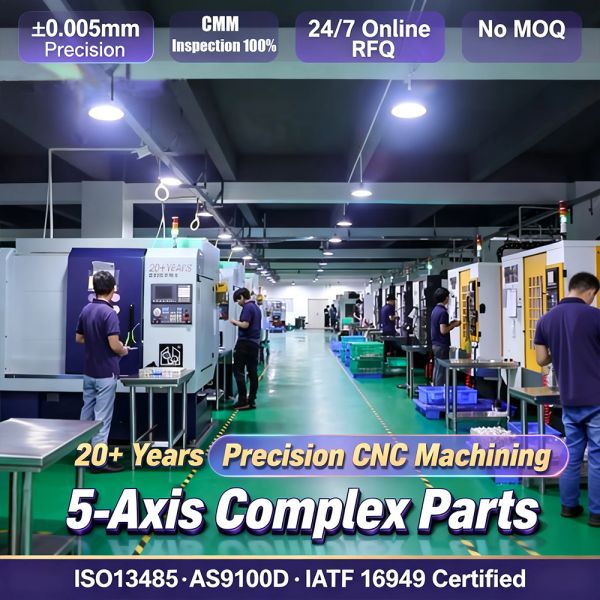

SHENZHEN, GUANGDONG, CHINA, August 26, 2026 /EINPresswire.com/ — PFTWORLD addresses documentation-sensitive sourcing as a China Leading CNC Machining Parts Manufacturer by combining custom milling, turning, and multi-axis machining with ISO9001:2015 at the company level and order-specific MTR, traceability, and inspection support. For aerospace or other controlled parts, buyers can define MTR/CoC, CMM, and FAI requirements alongside drawings and GD&T, ensuring quality documentation is planned with the manufacturing route rather than added after production. Industrial sourcing teams require verifiable proof that tight tolerances were achieved using approved materials and controlled processes. Establishing documentation requirements during the quoting stage eliminates compliance gaps that disrupt assembly schedules. Having appropriate test reports and material records available immediately upon shipment allows fast receiving inspection and seamless integration into industrial systems.
ISO9001:2015 Frames the Quality System Behind Custom CNC Orders
PFTWORLD pairs custom CNC capability with a company-level ISO9001:2015 quality-management framework, giving buyers a structured basis for process control across varied machining routes. Custom CNC orders combining milling, turning, and multi-axis machining across metals and engineering plastics require a robust system to ensure consistency. Complex orders requiring rough milling, precise turning, and final surface finishing move through distinct work centers. The quality system provides a common structure for controlling varied process routes, regardless of material or part complexity.
Company-level ISO9001:2015 is most useful paired with order-level records; certification establishes the management framework, while inspection and material documents establish what occurred on a specific batch. PFTWORLD positions quality management and machining capability as two connected layers: a controlled company system and a defined process route for each part. When a procurement team issues a purchase order for aluminum housings or stainless steel brackets, the ISO9001:2015 framework ensures tool calibration, operator instructions, and non-conformance procedures are standardized. This structured approach reduces the risk of undocumented process variations and gives engineering teams confidence that production matches approved prototypes, smoothing the transition to mass production.
MTR and CoC Records Extend Material Identity into Batch Traceability
Material documentation provides a traceable link between specified raw materials and controlled aerospace-part batches when MTR or CoC records are required. For these parts, PFTWORLD supplies Material Test Reports or Certificates of Conformance and maintains batch traceability, allowing procurement teams to reconcile material grades with order documentation. When components require specific titanium or aluminum alloy properties for high-stress applications, an MTR verifies the chemical composition and mechanical characteristics of the actual stock.
Traceability remains scoped to specific orders requiring it, avoiding unnecessary administrative costs on non-critical commercial parts while supporting regulated supply chains where material identity is paramount. Material records function as procurement controls when specified grade, conformity document, and batch identity stay connected throughout the controlled order. Keeping these records intact from material receipt until finished components ship allows buyers to confidently integrate parts into compliant assemblies and avoid delays associated with untraceable raw materials.
Inspection Reports Can Cover First Article, CMM, and Final Verification
PFTWORLD supports inspection documentation spanning first-article verification through dimensional measurement and final release. Aerospace-category quality documentation includes CMM reports, hardness tests, surface-treatment records, and AS9102 FAI support when required, giving buyers distinct report types for varied control points. A CMM report supplies objective data on complex geometries and tight geometric dimensioning and tolerancing (GD&T) callouts, while hardness tests confirm post-machining heat treatments meet structural requirements.
Automation-equipment orders can utilize MTRs, ISO9001-compliant records, and FAI for critical requirements. The appropriate report set should be defined by drawing risk. A heavy-duty robotics component may demand rigorous material certification and dimensional verification, whereas a standard mounting bracket requires basic checks. Inspection records are most effective when defined before production and tied directly to the dimensions, materials, or process characteristics that matter most. This focuses quality assurance efforts on actual functional requirements, providing engineers the exact data needed to clear components for final use.
Incoming, In-Process, and Pre-Shipment Checks Create Multiple Control Gates
PFTWORLD uses staged verification—including material acceptance, first-piece confirmation, sampling, and shipment checks—addressing defects at multiple points in the manufacturing cycle. The quality flow incorporates material inspection before machining, first inspection, process sampling, and a 100% pre-shipment inspection step. Catching dimension drift during in-process sampling prevents batch scrapping at the end of the line, keeping delivery schedules on track and controlling costs for high-volume orders.
CMM and 2-D measuring equipment add advanced measurement capability to this staged flow, matching dimensional checks to drawing features and tolerance requirements. These metrology tools provide the resolution to verify tight tolerances on intricate internal features or compound angles that manual tools cannot reliably measure. Multiple inspection gates reduce dependence on final inspection alone and provide buyers a clearer basis for specifying characteristics requiring recorded verification. Distributing quality checks throughout the production cycle maintains continuous control over the machining process, yielding higher consistency upon arrival.
RFQ Inputs Determine Which Quality Documents Belong to the Order
A complete RFQ must define drawing data, material grade, tolerance, and documentation expectations so PFTWORLD can align machining and quality records with the buyer’s acceptance criteria. Custom CNC production begins from drawings, 3D models, or specifications, giving engineering teams a concrete basis for manufacturability review and process planning. Pairing technical inputs with clear documentation requirements up front ensures the quote accurately reflects the total scope of work, including time and equipment required for verification.
For traceability-sensitive work, procurement teams should state MTR, FAI, CMM, or other documentation requirements in the RFQ instead of assuming all reports are bundled into every order. Clarifying these needs early prevents delays when completed orders lack specific paperwork required by quality departments, halting assembly lines. Defining technical and documentation requirements at quotation stage integrates the final inspection package into the manufacturing plan. This proactive communication guarantees correct data is captured during production, preventing attempts to reconstruct inspection records after parts ship.
Documentation Scope Turns the Locked Manufacturing Positioning into a Verifiable Buyer Decision
PFTWORLD combines custom CNC capability, company-level quality systems, and order-specific traceability into a sourcing package matched to controlled-part requirements. Custom CNC process coverage pairs with ISO9001:2015 at the company level and with MTR, FAI, CMM, or traceability records where the relevant order scope demands them. This flexible yet structured approach allows buyers to tailor their procurement strategy, securing only the necessary documentation while retaining the option to demand rigorous quality records for critical aerospace or medical applications.
Buyers can use the official PFTWORLD site to review machining capabilities and discuss which quality documents, inspection stages, and material records to incorporate into the next RFQ. Quality-system scope and order-specific documentation provide a concrete basis for supplier evaluation, moving conversations beyond unit price to include data reliability and manufacturing partner maturity. Integrating precision machining with verifiable quality records enables purchasing teams to secure needed components while meeting internal compliance standards without friction. Further capability details and RFQ contact are available at https://www.pftworld.com/.
Shenzhen Perfect Precision Products Co., Ltd.
PFTWORLD
email us here
Visit us on social media:
Instagram
Facebook
YouTube
X
Legal Disclaimer:
EIN Presswire provides this news content “as is” without warranty of any kind. We do not accept any responsibility or liability
for the accuracy, content, images, videos, licenses, completeness, legality, or reliability of the information contained in this
article. If you have any complaints or copyright issues related to this article, kindly contact the author above.

Media gallery