
Jaromir Chalabala // Shutterstock
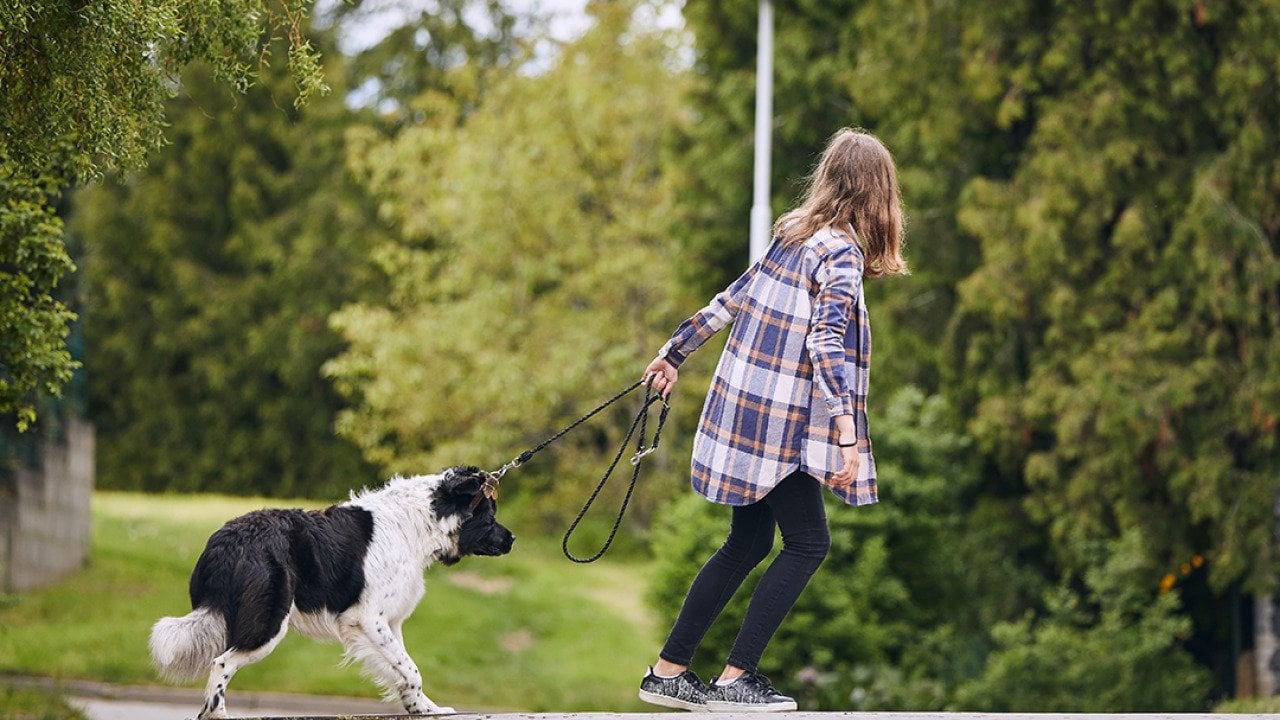
Why your dog suddenly refuses to move in the middle of a walk
George is not budging. A neighbor has stopped by to let him outside, but he refuses to move. We wonât go so far as to call George stubborn, but he is never going to get off this couch. Ever.
This golden retriever gets it â heâs at the beach and sees no reason to leave, so heâs not moving either.
And when this beagle plopped down and refused to finish her hike, she got her own personal Uber.
Every pet parent has experienced it: Youâre having a perfectly lovely time, then suddenly your dog just ⦠stops. If you have a five-pound Yorkie, itâs easy enough to scoop them up. But when you live with a great Dane, youâve got to get to the bottom of things.
Kinship spoke to three experts to answer the question: Why do some dogs just absolutely refuse to move?
Is it normal for dogs to go stiff as stone and insist on staying put?
This behavior is not uncommon, explains Dr. Andrew Findlaytor, a veterinarian and editorial advisory board member at dvm360, who regularly sees clients who are reluctant to get going. âI have seen them sit and refuse to walk, even lie down and play dead when they didn’t want to walk any further,â he says.
Tatiana Yastremski, a certified trainer and behavior consultant, knows the feeling: Sheâs seen many dogs put on the brakes. One day, she was out walking with her own pup, Mena, when Mena suddenly stopped just as they entered the park.
âItâs a place sheâs been to many times before, but for some reason on that day, the moment she stepped paws in the park, she quickly turned around and started to pull me back home,â says Yastremski, who works with dogs at St. Hubertâs Dog Training and Behavior Center in Madison, New Jersey.
While it was unusual, sheâs hesitant to call Mena or any dog stubborn when they get stuck. In fact, any time pet parents start to call their dogs âstubborn,â Yastremski suggests they reassess the situation. In fact, she says, it may be totally normal for your dog to suddenly freeze â and itâs a sign you need to pay attention to the reason why this is happening.
âThere are times that I hear from dog parents that their dogâs doing x, y, and z is because they are stubborn,â she says. âListen up, dog parents: Your dogs are not stubborn.â
In fact, they may be trying to communicate something. âLearning dog body language and knowing your dog is super important, as these two things could help you better understand the reason behind your dog becoming stuck,â she says.
Why do dogs refuse to budge?
If youâve seen this viral video of the golden retriever who was having a very fine day and did not understand why he had to get back in the car â and therefore decided to lie down in the middle of a parking lot â you might have a sense of why some dogs plant themselves and refuse to budge.
But itâs not always so clear-cut.
âIt is difficult to know what is going on in a dogâs head without understanding their previous learning experiences and what was going on in the environment right before these behaviors started,â says Dr. Kristin Kuntz, a board certified veterinary behaviorist at Insight Animal Behavior Services in Chicago.
However, Dr. Kuntz notes that there are a few common reasons dogs might be reluctant to move:
- They are âhighly motivatedâ to stay put (they think they will get more attention or theyâre just comfortable).
- Theyâre frightened of something in their environment (a loud noise, fast-moving vehicles, or other animals or people).
- Theyâre in pain or have another form of discomfort (think an injury or arthritis).
Yastremski agrees: âThey could be tired, not feel well, they could have possibly stepped on something and hurt their paw, they may be older and donât want to walk too far, or they perceive something stressful or threatening,â she says.
How can you best decode your pupâs mood?
Dr. Kuntz says that dogs who are annoyed, bored, stressed, or uncomfortable will use their body language to communicate.
For example, panting or limping may be signs of pain. Tucking their tail, licking their lips, or avoiding eye contact may mean theyâre frightened by something. Study up on dog body language to get an idea of what your pup is trying to âsay.â
âThe dog may be communicating fear, stress, discomfort, and/or frustration,â Yastremski says. âItâs important for pet parents to understand what the purpose of the behaviors is, especially if those behaviors never existed before.â
But if the reason is murky â or itâs just new behavior â itâs best to pay a visit to your veterinarian to decode whatâs going on. From there, you can work on a plan to help your pup feel better. âIt is important to understand the âwhyâ behind the lack of movement,â Dr. Kuntz says. âIf the dog is [in pain], then activity restriction, pain management, and any other indicated treatment should be pursued.â
And if itâs a trigger thatâs frightening your dog, that can also be managed. âThen the pet parent should work with their veterinarian and a positive-reinforcement trainer to create a treatment plan to help the dog become more confident around the scary trigger,â Dr. Kuntz notes.
How can you ask your dog to move (in the nicest way possible)?
But sometimes, itâs fairly clear that our dogs are just having an amazing time â and donât want to miss out. So, how do you convince them to go home?
âAs for what we can do about it, our dogs are clever,â Dr. Findlaytor says. If you know that your dog is frustrated about leaving the park â even though itâs been two hours â itâs OK to humor them a little. âGetting frustrated isn’t the solution, although sometimes laughing is absolutely the solution,â he says.
But eventually everyone must leave the party â what then? You should be thinking about this before it even happens. Good training ahead of time can help you in that moment.
Figure out what motivates your dog, advises Dr. Kuntz, noting that it could be food, pets, or praise. âUse that as a reward for performing the desired behavior,â she says. âFor example, when the dog is walking next to their pet parent, it is important for the pet parent to reward that good behavior.â
Then, when you do get stuck, use those motivators to encourage your dog.
Yastremski suggests:
- Encouraging your dog verbally using a âhappy and excited voiceâ
- Using treats to lure them forward
- Trying to get them to do tricks they already know
- Seeing if theyâll follow a dog whoâs already walking ahead
As for Yastremski, when her dog Mena refused to move in the park that day, she encouraged her with kind words and treats, but Mena wouldnât move an inch.
So, Yastremski carefully read Menaâs cues: âHer ears were back and pretty much plastered to her head, which can be a sign of worry and caution,â she says. âShe was moving very quickly and kept turning around repeatedly to check in with me. The pupils in her eyes were mildly dilated. All I could think of is that she was perceiving a threat.â
Yastremski realized that there was a good reason Mena had decided not to take her usual route. âShe could have picked up the scent of a wild animal passing through, and since there are bears and coyotes where I live, there was a high probability of that,â she says. âOnce we entered our neighborhood, Mena was back to her old self again, walking calmly, sniffing, and checking in with me while at my side.â
This story was produced by Kinship and reviewed and distributed by Stacker.

